
NEWS stories

Southern California Edison Starts Making Payments to Eaton Fire Victims—but There’s a Catch
Nearly a year after the deadly Eaton fire in Southern California, the first payment from the Wildfire Recovery Compensation Program has been made.
In October, Southern California Edison launched the program, which offers to reimburse victims for their losses and provides additional sums for pain and suffering.
SCE did not reveal how much was paid, but the program says it provides 42 months of housing support, covering individuals who lost their single-family homes.

After the L.A. County fires, heart attacks and strange blood test results spiked
Emergency room visits for heart attacks at Cedars-Sinai Medical Center jumped 46% in the 90 days after the fire, and unusual blood test results more than doubled.
The new findings are part of a research project documenting the fires’ long-term health effects.
Researchers believe the fires’ true death toll is much higher than the 31 documented fatalities related to injuries.

Edison neglected maintenance of its aging transmission lines before the Jan. 7 fires. Now it’s trying to catch up
Edison failed to spend hundreds of millions of dollars authorized for transmission line maintenance and upgrades before January’s fires while continuing to bill customers for the work.
Edison’s aging transmission lines are suspected of igniting two January fires, including the Eaton fire that killed 19 people and destroyed over 9,000 homes in Altadena.
After the fires, Edison accelerated repairs. It denies it fell behind on maintenance.
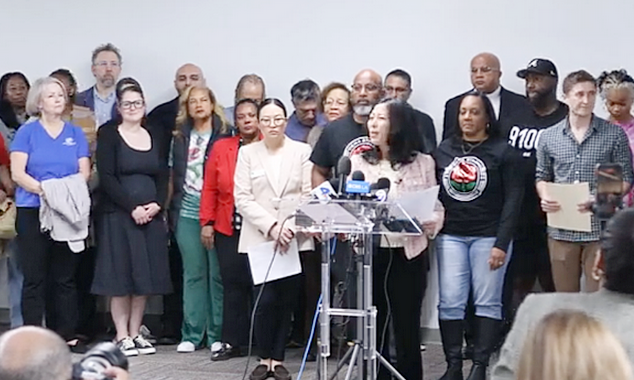
Eaton Fire Survivors Demand SoCal Edison Provide Housing Relief
Nearly one year after the Eaton Fire destroyed or contaminated thousands of homes in Altadena, fire survivors Tuesday urged Southern California Edison to provide housing aid to the many families facing homelessness.
Eight in 10 Eaton Fire families remain displaced with most running out of housing funds, according to research by the nonprofit Department of Angels. Fire survivors say without support from SoCal Edison, families cannot move forward in their recovery while fearing where they will sleep next month.
“We are not here in anger. We are here in love for our community,” said Joy Chen, executive director of the Eaton Fire Survivors Network. “When a company’s fire destroys or contaminates homes, that company has a responsibility to keep families housed until they can get back home.”

L.A.’s hydrants ran dry during the fires. Residents are still demanding solutions
The deadly wildfires in January revealed the limitations of Southern California’s water systems. When the overtaxed systems lost pressure, fire hydrants ran dry.
Nearly a year later, residents and experts are weighing solutions that would make more water available for firefighting, including installing cisterns, tapping water from swimming pools, or even turning to mobile pumps and pipes that could quickly route water where it’s needed.

The fire took his sister and his lifelong home. He’s been fighting to get back ever since
Zaire Calvin grew up in Altadena. For nearly a year since the Eaton fire destroyed his town, he has become a voice for his community.
His mom bought his childhood home in the 1970s when Altadena was one of the few places Black families could own properties. Years ago, he bought the house next door. Both homes are gone now.

After a rocky start, rebuilding in the Palisades and Altadena is gaining momentum
Rebuilding momentum is accelerating in Palisades and Altadena, with about 12% to 13% of destroyed homes receiving permits as of December, up from a slow start.
Both communities’ recovery pace falls between Santa Rosa’s rapid 27% permit rate and Paradise’s slower 3%, showing mid-range progress rebuilding.
Fire victims face significant obstacles: understaffing at city agencies, supply chain delays, insurance gaps, and a strained labor market slowing construction timelines.
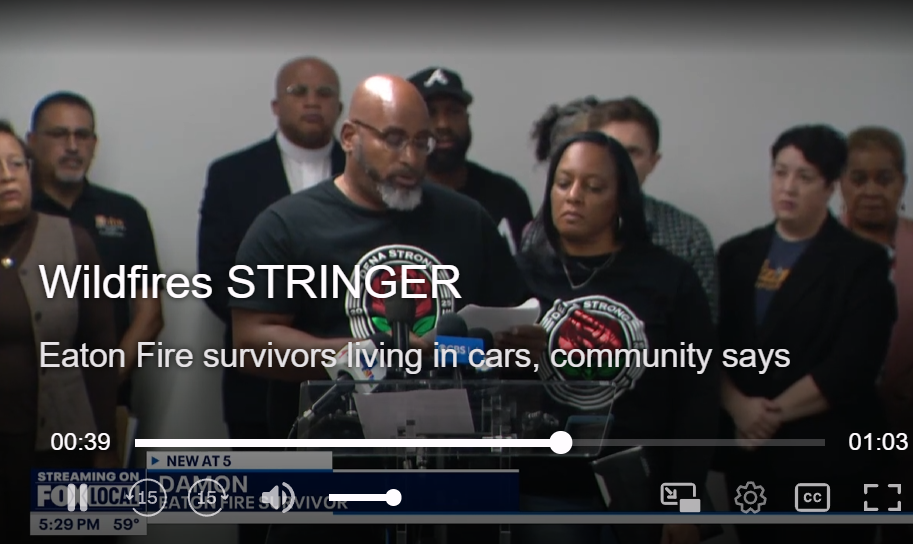
Eaton Fire survivors demanding SoCal Edison provide housing aid
A group of Eaton Fire survivors are asking Southern California Edison to advance temporary housing support immediately.
SoCal Edison says the company is committed to helping the Altadena community recover, but residents argue the program isn't enough.
The Eaton Fire destroyed more than 9,000 buildings, including some 6,000 homes.
PASADENA, Calif. - Eaton Fire survivors are urging Southern California Edison to provide housing aid to the many families now facing homelessness.
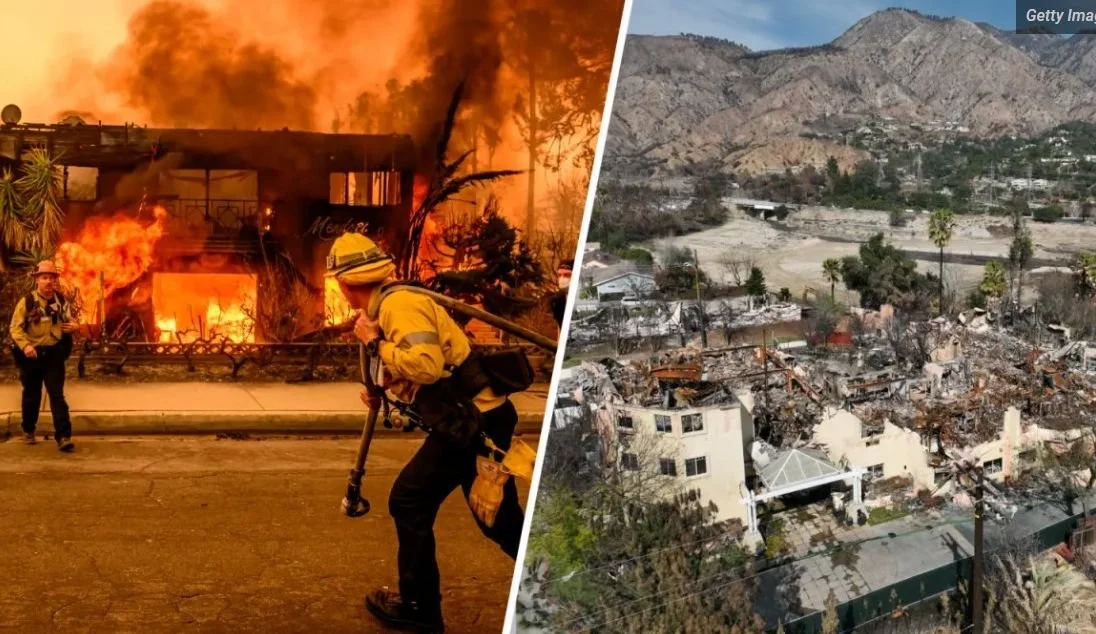
SoCal Edison makes first compensation payment to Eaton Fire survivors
Southern California Edison, accused of starting the deadly Eaton Fire in the Altadena area, has made its first compensation payment to an Eaton fire survivor or a family of survivors, the utility announced Tuesday.
SoCal Edison began offering compensation through the Wildlife Recovery Compensation Program in September, promising expedited payments for various types of damage or destruction by the January wildfire.
The company did not say who received the compensation, and how much the person/house hold received.

Eaton fire survivors ask Edison for emergency housing relief
A coalition of Eaton fire survivors and community groups called on Southern California Edison on Tuesday to provide immediate housing assistance to the thousands of people who lost their homes in the Jan. 7 wildfire.
The coalition says an increasing number of Altadena residents are running out of insurance coverage that had been paying for their housing since they were displaced by the fire. Thousands of other residents had no insurance.
“When a company’s fire destroys or contaminates homes, that company has a responsibility to keep families housed until they can get back home,” said Joy Chen, executive director of the Eaton Fire Survivors Network, one of the coalition members asking Edison for emergency assistance of up to $200,000 for each family.
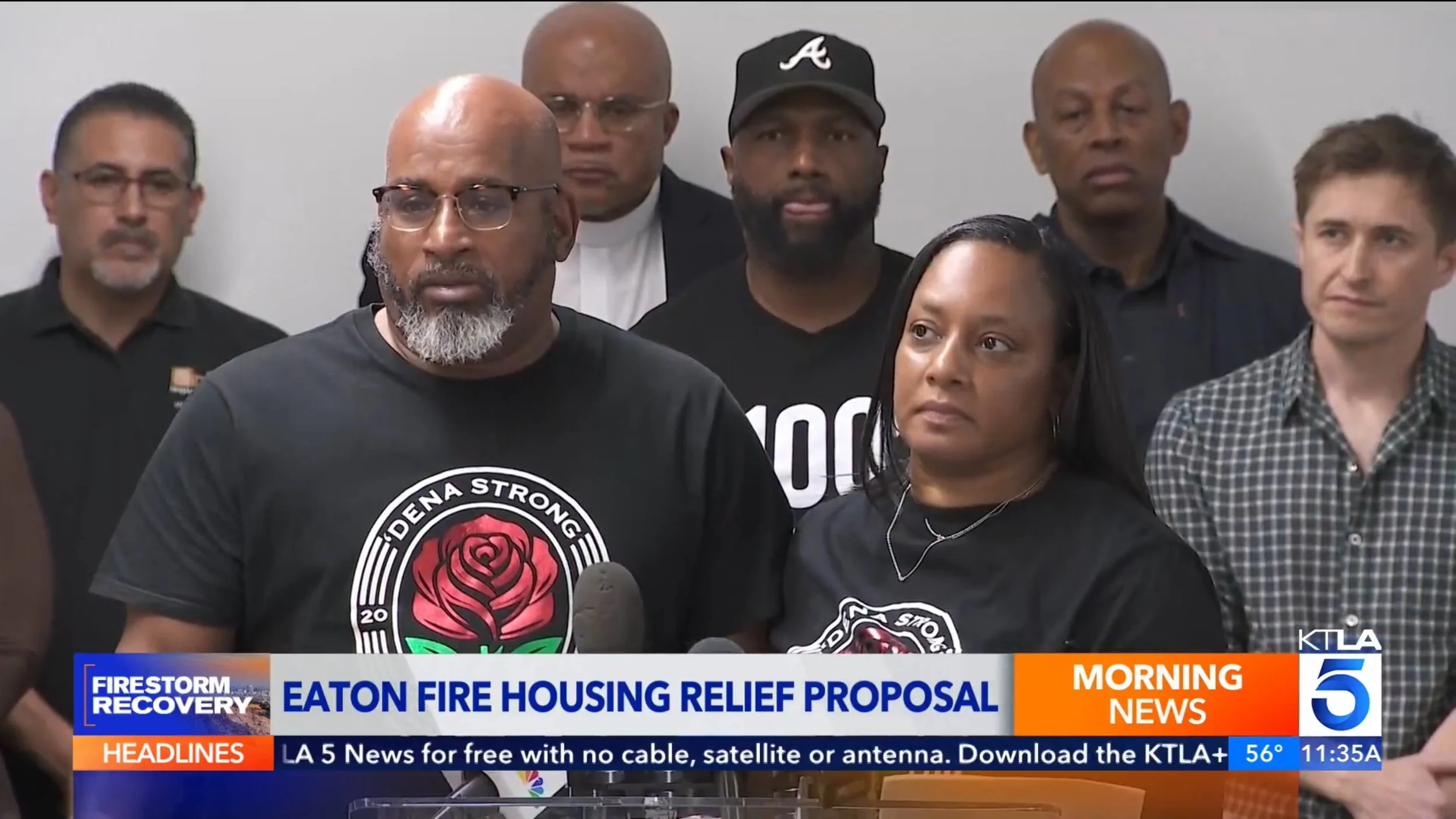
Groups call on SoCal Edison to advance urgent housing relief for families displaced by Eaton Fire
A coalition of community groups came together to present a plan to prevent a worsening housing crisis in Altadena due to the Eaton Fire, and they want SoCal Edison to pay for it.
The coalition, led by the Eaton Fire Survivors Network, the Eaton Fire Collaborative Leadership Council, the Clergy Community Coalition and the Altadena Town Council, unveiled a housing relief proposal on Tuesday morning. In a joint media release, the groups said the plan is aimed at “stabilizing families so that the Eaton Fire recovery can proceed.”

Eaton Fire survivors demand housing funds from SoCal Edison
Survivors of the deadly Eaton Fire and local officials on Tuesday called on Southern California Edison to pay for rental housing as many displaced Altadena residents struggle with disaster recovery.
A coalition of fire survivors, activists, elected officials and area residents gathered nearly a year after the January wildfire to warn that recovery has stalled because families are struggling to stay housed. According to the Eaton Fire Survivors Network, Edison bears financial responsibility because the utility’s equipment sparked the blaze.

Edison president discusses Eaton Fire, compensation program for victims
Nearly a year after the Eaton Fire ripped through Altadena, destroying thousands of buildings and homes and killing at least 19 people, the Edison International president is addressing the devastating blaze and the company's work to help victims.
Pedro Pizarro, President and CEO of Edison, the parent company of Southern California Edison, says that despite there being no official cause of the destructive inferno, the company has started to pay out to victims through a compensation program.
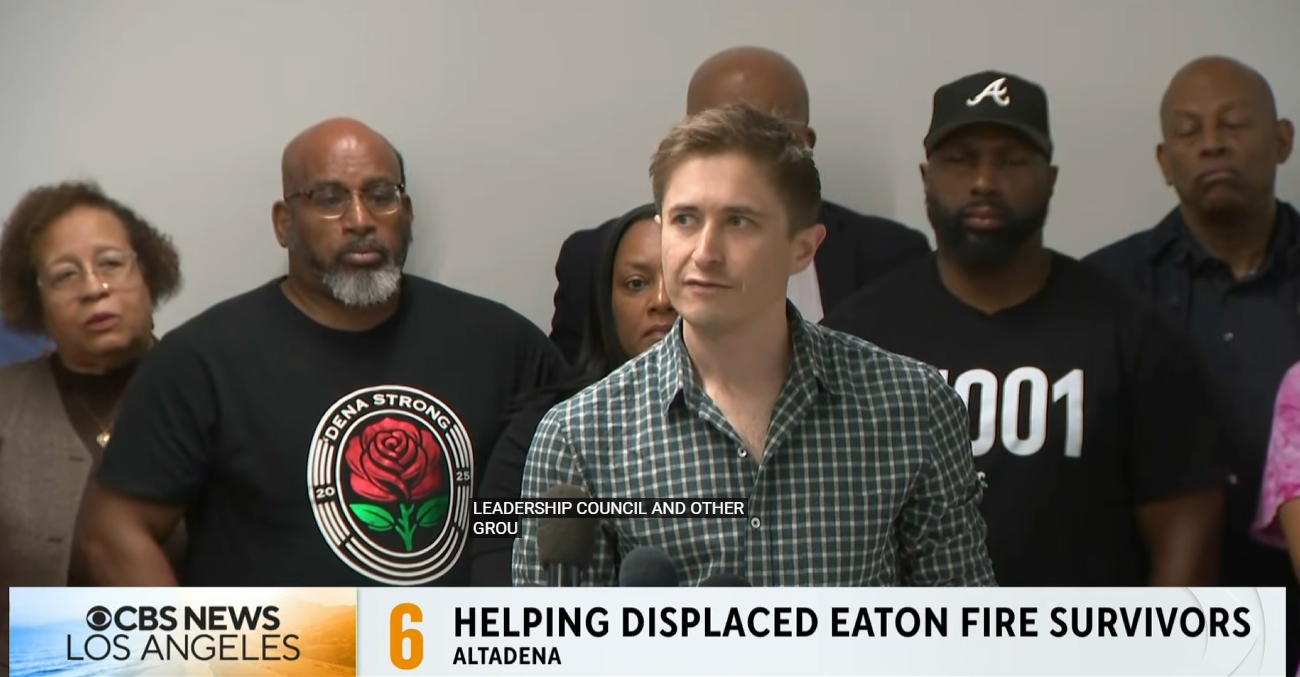
Eaton Fire survivors urge Southern California Edison to provide temporary housing support
A coalition of Eaton Fire survivors and advocates is urging Southern California Edison to provide housing support for those still struggling after losing their homes.
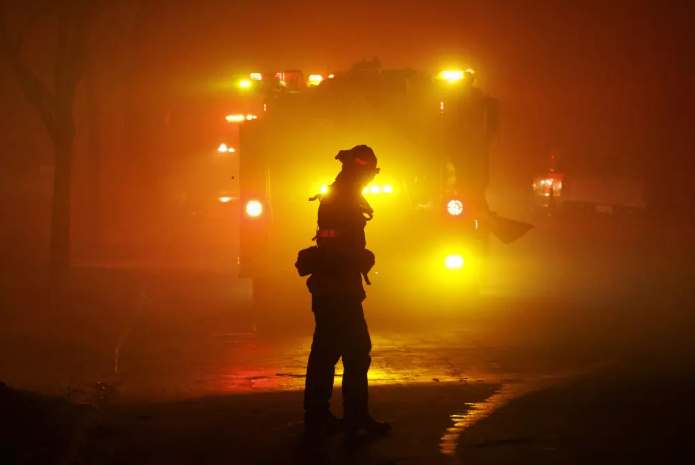
With Altadena burning, L.A. County lacked satellite mapping tool used by other agencies
The L.A. County Fire Department lacked access to FireGuard, a satellite mapping tool other California agencies have used for years to track wildfires.
During the Eaton fire, when aircraft were grounded, officials couldn’t see the fire’s westward advance — relying instead on ground observations in heavy smoke.
FireGuard data showed fire advancing toward west Altadena hours before evacuation alerts were issued, where nearly all 19 Eaton fire deaths occurred.
When the Eaton fire broke out in the foothills near Altadena, the Los Angeles County Fire Department did not have access to a satellite-based fire-tracking program regularly used by other agencies, depriving officials of intelligence that could have been helpful in determining evacuations.
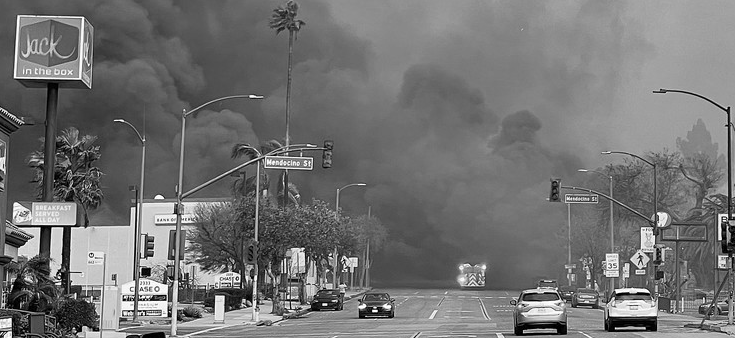
The Hidden Toll of Wildfire Smoke: It’s Time Insurers and Lawmakers Treat Smoke Damage as Deadly
Our client, Luis Cazares, thought he was lucky.
When the Eaton Fire tore through the foothills of Altadena, his home—unlike many of his neighbors—was still standing. But relief didn’t last. The air inside was thick with chemicals, ash, and toxins. Within minutes, he felt sick. Smoke had soaked into walls, furniture, and ventilation system, rendering the house unlivable.
Luis isn’t alone. Thousands of Californians returned to homes spared by flames but poisoned by smoke. A 2025 JAMA study found that Los Angeles County experienced over 440 excess deaths following the Eaton and Palisades fires, far beyond the 31 official fatalities. And analyses summarized by the Salata Institute at Harvard link wildfire smoke to dramatic spikes in out-of-hospital cardiac arrests, in some cases reaching 70% above baseline during heavy-smoke periods.

Still having home insurance problems? Need mental health services? This Altadena group wants to help
The Collaboratory, an Altadena disaster relief hub, opened in October to house nonprofits serving fire survivors still rebuilding after January’s Eaton fire.
The hub consolidates scattered aid for housing, mental health and permitting to address the complex needs survivors face.
As charitable attention fades, the Collaboratory is a critical lifeline for those still at risk of community displacement.
The first thing you see when you walk into the Collaboratory in Altadena is a wall of devastation. A floor-to-ceiling map of every lot lost to the Eaton fire in January — 9,413 structures. Each marked with a red dot on a grid of streets that have looked like a charred moonscape for 11 months.
The wall is a harrowing depiction of loss in the Eaton fire. But one turn to the right, and hope kicks back in.
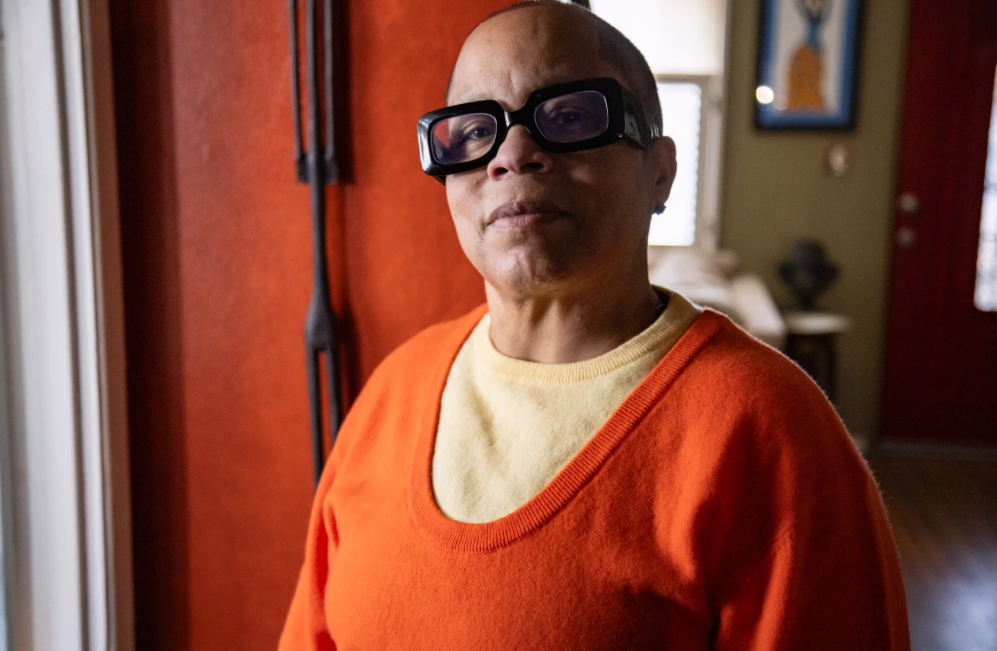
As deadlines loom, fire survivors call for more mortgage help
Fire survivors are calling for longer timelines on mortgage forbearance and better policy to stop credit hits as the expiration of mortgage protections looms nearly a year after the most destructive fires in L.A. County history.
After the Eaton and Palisades fires, hundreds of mortgage companies promised to let borrowers delay their monthly payments for 90 days. In September those protections were extended and enhanced when Gov. Gavin Newsom signed Assembly Bill 238 into law. That allowed survivors to request forbearance for up to 12 months, without requiring full repayment at the end of the forbearance period.
Ever since, fire survivors have said some mortgage lenders are not adhering to those rules.

Newsom, seeking federal funds for L.A. wildfire recovery, is denied meeting with key Trump officials
Gov. Gavin Newsom was on Capitol Hill on Friday renewing calls for $33.9 billion in federal aid for Los Angeles fire recovery.
FEMA denied Newsom’s meeting request, underscoring political tensions surrounding California’s disaster recovery appeal following the January fires.
The governor criticized the Trump administration for stalling on a recovery proposal, despite bipartisan congressional support for long-term funding
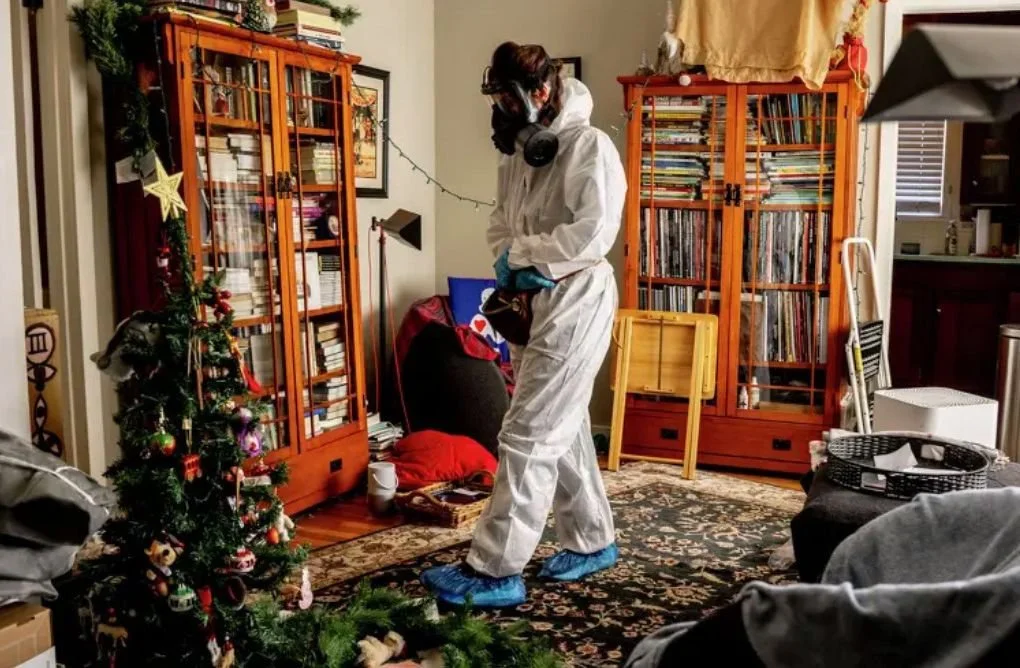
California is drafting new rules for wildfire smoke cleanup. Are home insurers calling the shots?
As the Los Angeles wildfires died out in January, firefighters trekked through the burn zones to take stock of the destruction. For every home they found leveled, they counted another still standing. The structures looked fine from the outside, but ash and oily soot often coated the floors and furniture, while invisible chemicals burrowed into clothes, blankets and even walls.